Method came out on top in our UK Top 10 Bathroom Cleaners — and with some eco credentials, it looks like a planet-friendly pick.
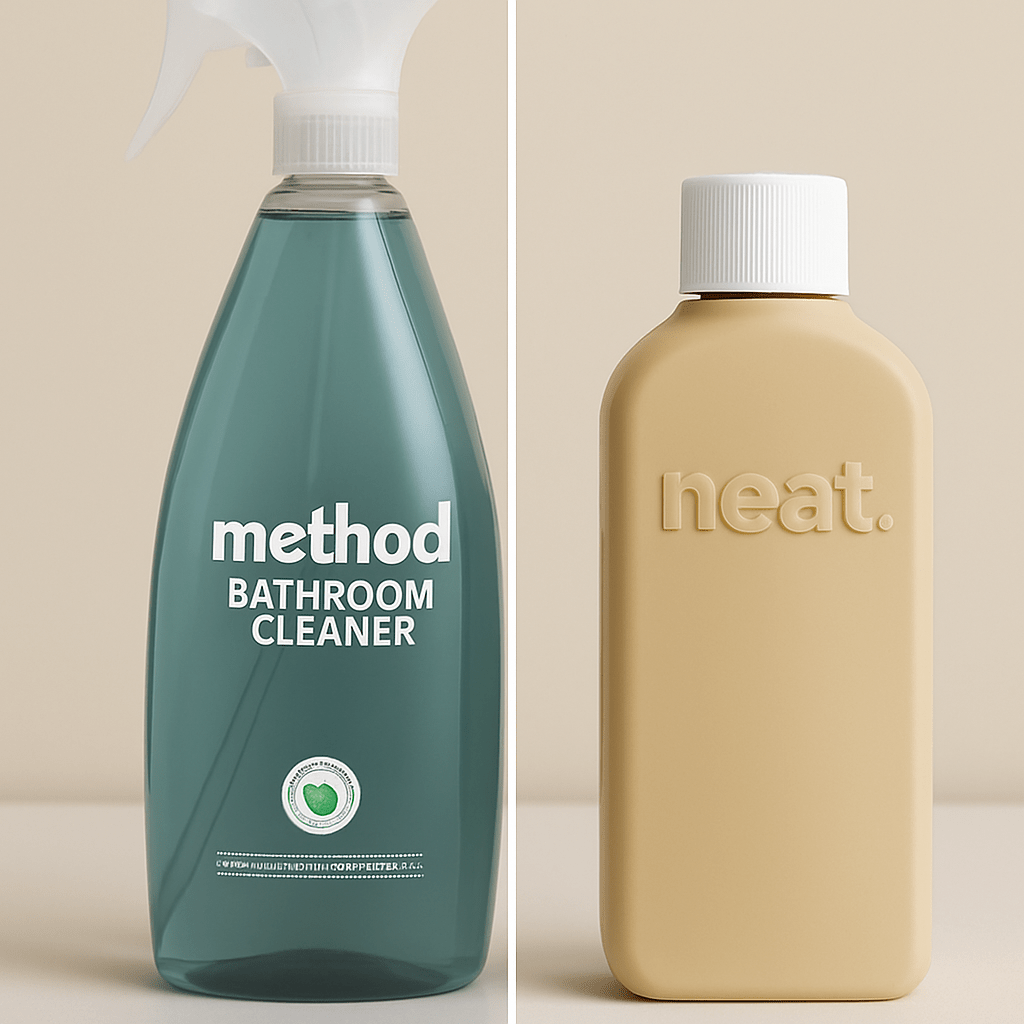
But how does it really compare to a fully eco-certified alternative? In this side-by-side, we ask: is there a meaningful difference in performance between eco-conscious and truly eco-friendly cleaners — and is it worth making the switch?
🛁 Neat Bathroom Cleaner
- ✨ Cleaning Power: 4.1 / 5 effective but milder than top performers
- 💷 Cost: £6.00 starter + £2.50 refill (30ml concentrate makes 500ml) – £0.50 per 100ml
- 🫧 User Experience: Sleek bottle and scent, but spray mechanism can clog slightly
- ⭐ Customer Feedback: Rated 4.5 from 30+ verified UK reviews
- ♻️ Eco Rating: 4.9 / 5
- Overall Rating: ⭐⭐⭐⭐ 4.2 / 5
🚿 Method Bathroom Cleaner
- ✨ Cleaning Power: 4.5 – Cuts through grime with ease.
- 💷 Cost: £3.50 (828ml) – £0.42 per 100ml
- 🫧 User Experience: Easy to use, satisfying scent, works well on tiles & chrome
- ⭐ Customer Feedback: Rated 4.7 / 5 (from 460+ verified UK reviews)
- ♻️ Eco Rating: 3.3 / 5
- Overall Rating: ⭐⭐⭐⭐ 4.6 / 5
Ratings
Method takes the lead on cleaning power — no surprise given it topped our full Top 10, beating even premium non-eco brands.
Both score highly for customer satisfaction, but Neat’s concentrated formula means you’ll need to pour and mix, which adds a small step.
Cost-wise, Neat’s starter kit is pricier upfront (as it includes the reusable bottle), but once refilling, it works out at just £0.50 per 100ml diluted — making it a similar cost effectiveness long term. As it stands Method is more powerful and cheaper so stands as the easy choice before having a look at eco ratings.
♻️ A closer look at eco ratings
1. Ingredients
Method: Uses mostly plant-based ingredients, but includes some synthetic preservatives. Not fully biodegradable.
Neat: Fully biodegradable, plant-based formula with no unnecessary fillers.
2. Packaging & Refill
Method: Recycled plastic spray bottle. No closed-loop refill system.
Neat: Aluminium reusable bottle with plastic concentrate refills. Supports a true refill system.
3. Certifications
Method: Cruelty-Free International (Leaping Bunny), but lacks third-party eco certification for ingredients.
Neat: No third-party certification, but meets the “Full Disclosure Exception” with transparent ingredient listing and verified eco claims.
4. Transparency
Method: Good ingredient disclosure, but vague about environmental goals and packaging impact.
Neat: Fully transparent across ingredients, packaging, sourcing, and brand mission.
5. Brand Accountability & Scalability
- Method: Owned by SC Johnson. Accessible nationwide, but parent company has mixed environmental record.
- Neat: Independent UK brand with scalable refill model and sustainability as its core mission.
Verdict
Method remains the best all-round bathroom cleaner on the market — powerful, affordable, and easier to use than most eco alternatives. It also carries several eco-conscious features, which makes it appealing to green-minded shoppers. But despite the branding, it’s not a fully eco product. Once you factor in limited ingredient transparency, a lack of closed-loop packaging, and corporate accountability concerns, Method sits firmly in the eco conscious category.
Neat, on the other hand, is a truly eco-friendly option — offering a closed-loop, refillable system and full ingredient disclosure. But it’s a more expensive route, with slightly less cleaning power and the extra step of dilution. Still, if reducing your environmental footprint is your top priority, the trade-offs may be worth it.
Last words?
The great news? No matter which way you lean — eco conscious or fully eco — the top-performing bathroom cleaner on the market isn’t a chemical-heavy brand. Method, an eco conscious option, outperforms even the premium names, proving that harsh ingredients aren’t a requirement for powerful cleaning. In this category at least, greener really is better.
FAQs
What’s the difference between “eco-friendly” and “eco-conscious”?
Eco-friendly products meet high standards across ingredients, packaging, certifications, transparency, and brand accountability. Eco-conscious products make some positive steps — like using plant-based formulas or recycled packaging — but may fall short in areas like ingredient disclosure, refill systems, or parent company ethics.
Why not just switch to fully eco-friendly products every time?
In some categories, performance gaps, cost, or accessibility can make eco-conscious options more practical. Our goal is to highlight both where possible — and to show that even eco-conscious products can outperform traditional ones when chosen carefully.
⚖️ Disclaimer
The Overall Rating shown in our product cards is based purely on Cleaning Power, User Experience, and Customer Feedback. Eco Ratings are displayed separately and do not affect performance rankings. This comparison is intended to help readers understand the trade-offs between products that are eco-conscious versus fully eco-friendly.
 Consumers Lens